Featured Hotels & Resorts in India
Below is a selection of hotels for holidays in India. If you can't find what
you are looking for, feel free to give us a call on 066 7164400 (Tralee) or 01 6649999 (Dublin) to discuss your
requirements, alternatively you can view our holidays in other Indian Ocean and Sub Continent destinations.
Casa De Goa
A beautiful boutique resort near the famous Calangute beach. The beach is just 5 minutes walk from the resort. This is a quiet property offering good personal service.
The Leela
This 5-star beach resort, is a contemporary celebration of south India’s Vijayanagara Empire temple and palace architecture, and Goa’s Portuguese heritage.
Taj Green Cove
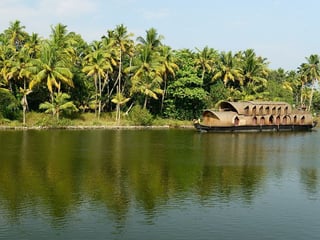
The hotel is set on a hillside, behind the resort of Kovalam , offering wonderful views of the backwater lush landscapes, coconut palms, and unspoiled beaches
Grand Intercontinental
Set on the beach at Raj Baga, this spacious resort has its own private access to a secluded beach, a golf course, an excellent pool and some good restaurants from formal to beach shack
Somatheeram Trivandrum
Located on the picturesque Malabar Coast five miles south of Kovalam, Somatheeram is set in 15 acres of lush greenery, palm trees and bewitching blue waters
Marari Beach
Located on a stretch of pristine beach in between fishing villages, this is an ideal, totally relaxing ’back to nature’ way to end your Kerala holiday. The large cluster of bungalows sits around a couple of restaurants a club house and an Ayurvedic spa. Total relaxation is guaranteed!
See Hotels & Resorts in...
Location
The subcontinent of India lies in south Asia, between Pakistan, China and Nepal.
Geography
India is set apart from the rest of Asia by the Himalayas, the highest, youngest and still evolving mountain chain on the planet. From north to south India extends a good 2000 miles. The subcontinent as it is rightly called, touches three large water bodies. This thick, roughly triangular peninsula defines the Bay of Bengal to the east, the Arabian sea to the west, and the India Ocean to the south.
History
Nearly five thousand years back flourished India’s first major civilisation along the Indus River valley. The twin cities of Mohenjodaro and Harappa now in Pakistan were ruled by priests and held the rudiments of Hinduism. These civilisations are known to possess a sophisticated lifestyle, a highly developed sense of aesthetics, an astonishing knowledge of town planning and an undecipherable script language. The Indus civilization at one point of time extended nearly a million square kilometres across the Indus river valley. It existed at the same time as the ancient civilizations of Egypt and Sumer but far outlasted them. Surviving for nearly a thousand years the Indus valley civilisation fell to tectonic upheavals in about 1700 BC, which caused a series of floods.
Climate
Generally, India’s climate is defined by three seasons - the hot, the wet (monsoon) and the cool, each of which can vary in duration from north to south. The most pleasant time to visit most places is during the cooler period: November to around mid-February.
Language
Hindi. Although it is India’s national language, Hindi is only spoken as a mother tongue by about 20% of the population. Other languages include Urdu and Bengali. English is widely spoken too.
Currency
Indian Rupee (RS).
Electricity
230-240V 50Hz.
Time difference
GMT + 5.5 hours.
Tipping
In mid-range and upper-end restaurants or hotels a service charge (usually 10%) is often added to bills, so tipping is very optional. In smaller places, where a service charge has not been added to the bill, a tip is warmly appreciated - the amount you give depends on how happy you are with the service. Anything upwards of IRS20.00 is the norm, but exceptional service should be rewarded with at least IRS50.00.
Water
Tap water is not recommended for drinking. We recommend you buy bottled water.
Visas
You need get an entry visa before arriving in India. Six month multiple-entry visas are now issued to most nationals regardless of whether you intend staying that long or re-entering the country. Only six-month tourist visas are extendable. Most Indian embassies and consulates won’t issue a visa to enter India unless you hold an onward ticket. Note that visas are valid from the date of issue rather than the date of arrival in India.
What makes it so special?
India’s amazing diversity offers you everything you could ever want in a holiday. Bounded by the majestic Himalayan ranges in the north and edged by a spectacular coastline surrounded by three seas, India is a vivid kaleidoscope of landscapes, magnificent historical sites and royal cities, golden beaches, misty mountain retreats, colourful people, rich cultures and festivities.
Where to visit
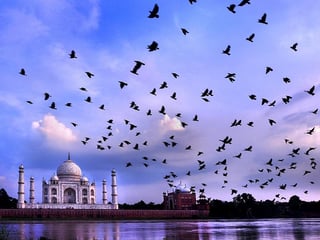
Agra - The Taj Mahal has become the tourist emblem of India. This poignant Mughal mausoleum was constructed by Emperor Shah Jahan in memory of his second wife Mumtaz Mahal, whose death in childbirth in 1631 left the emperor heartbroken.